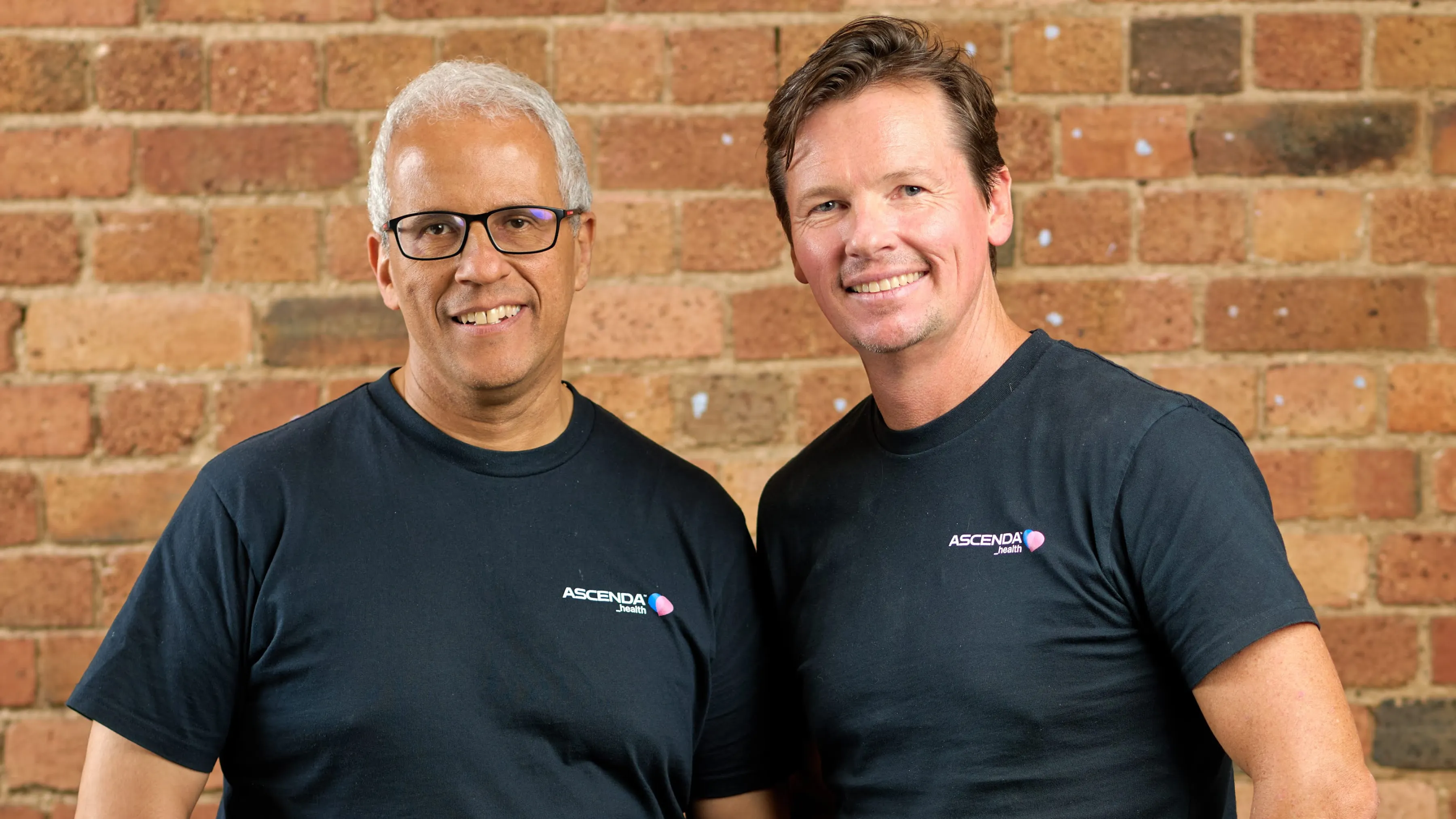


A few years ago, Nathan Challen experienced something unexpected: a heart attack.
He was relatively young, fit and healthy. It was a confronting and confusing moment.
As part of his recovery, Nathan was given access to rehabilitation services, including psychology support. On paper, it should have been one of the most useful parts of the process.
But it wasn’t.
“The sessions felt disconnected from what was actually happening in my life,” he says. “Not because of the psychologist, but because the system had almost no visibility into what was building between sessions.”
Stress. Workload. Behaviour patterns. How he was reacting day-to-day. These were the signals driving it all but they remained invisible.
And that’s when it clicked.
“The real issues people experience don’t happen inside the therapy session. They build quietly in the days and weeks between them.”
For Nathan, that wasn’t just a personal frustration. It was something else entirely.
A systems problem.
The gap no one sees
Nathan had spent more than twenty years designing and building software systems, particularly in industries where human expertise and operational pressure collide.
Looking at his own experience through that lens, the issue became obvious.
Mental health support doesn’t fail because of a lack of care. It fails because the system has no visibility into what happens outside the session, which is where 99.9% of a person’s life actually unfolds.
That gap shows up everywhere.
Most organisations already provide mental health support through Employee Assistance Programs. But in Australia, utilisation sits at just over 5%. Support is often generic and reactive, kicking in only after someone has already reached a breaking point.
By then, the damage has often been building for years.
Clinicians see the same pattern from the other side. Therapy happens periodically, but the pressures people experience don’t. They build continuously, between sessions, without signal or context.
Ascenda sits in that gap.
Building visibility where it matters most
Ascenda helps psychologists and employers support people before problems reach crisis, by creating visibility into what is happening between sessions.
Employees engage in short, regular check-ins with AI personas designed to understand the context of their role and industry. Over time, the system identifies patterns; where strain is building, how behaviour is shifting, what might need attention.
If someone needs human support, the therapist doesn’t start from zero. They begin with context: what has been happening, where the pressure is appearing, and how it has evolved.
Importantly, Ascenda isn’t trying to replace therapists, it’s designed to augment and scale their impact, keeping clinicians in the loop with oversight built into every interaction.
By focusing on the time between sessions, it surfaces the signals that matter most; early enough for meaningful intervention.
For employers, those signals roll up into a clearer view of psychosocial risk across teams, something that has traditionally been almost impossible to see until it’s too late.
The goal is simple: make the invisible visible, early enough to act.
Seeing the same problem from different sides
Nathan met his co-founder Hamada Els through a mutual connection during early customer discovery.
What stood out immediately was alignment.
Nathan had experienced the gap personally and was approaching it as a systems problem. Hamada, a clinical psychologist and practice owner, had been questioning the traditional therapy model from inside clinical practice.
“We were seeing the same problem from different directions,” Nathan says.
They both believed the real work happens between sessions. And that prevention, not just treatment, is where the system needs to evolve.
That alignment happened in their first meeting.
Since then, their perspectives have remained complementary. Hamada understands what good care looks like in practice. Nathan builds the systems that allow that care to scale.
Both are necessary if you want to change how the system works.
From validation to direction
Ascenda is still early, but the path has come into focus.
The team has spent hundreds of hours speaking with patients, clinicians, operators and organisations, pressure-testing where the real pain sits and who is willing to pay to solve it.
One thing became clear: looking only at clinics and psychologists gave an incomplete view of the problem. The real shift came when they turned to Employee Assistance Programs, where the full system comes into view; the organisation, the clinician and the employee, all connected.
That became the foundation of their go-to-market.
“Employers already fund mental health support,” Nathan says. “The problem isn’t access to support, it is the lack of visibility before things escalated.”
Rethinking how mental health support works
Ascenda is building toward a future where mental health support is continuous, not episodic.
Instead of relying on isolated sessions, clinicians and organisations will have ongoing insight into what is happening between them. Support becomes contextual, proactive and far earlier in the process.
In the short term, the team is focused on running pilots in high-pressure environments; healthcare, legal, consulting, where the cost of that gap is already visible.
Over time, the ambition is much broader: to make continuous mental health support the norm.
A system where people don’t wait until crisis to receive help.
Where support fits into daily life in the same way fitness tracking already does.
A world where it will feel strange that care once relied almost entirely on isolated, 50-minute sessions.
The ask
Ascenda would love to connect with:
- HR leaders who believe mental health support should go beyond compliance
- Psychologists and clinic owners interested in better support between sessions
- Organisations willing to pilot a more continuous model of care
Check them out at https://ascenda.one/
Watch them pitch at Demo Day
When: Thursday, 30 April @ 7:00 PM (pre-party starting at 5 PM)
Where: Carriageworks (at the close of Blackbird's Sunrise Festival)
What: Pitch night (19 companies)
Tickets: Grab your ticket here


.png)
.png)